Office Clearance in Chelsea

Office clearance in Chelsea needs to be handled with care, clear planning and a practical understanding of what can be removed, sorted and prepared for reuse, recycling or disposal. Our service is designed for workplaces that want a tidy, efficient way to clear desks, storage, meeting-room furniture and general office contents without turning the task into a long disruption. We focus on making the process straightforward from the first enquiry through to the final loading, with sensible attention to access, timing and item separation.
Whether you are emptying a single suite, updating a shared workspace or dealing with items left behind after a move, we can support a wide range of office clearance work. The service is suited to businesses that need practical removal rather than complicated arrangements, and it can be tailored around the type of furniture, equipment and non-sensitive contents present on site. If you are comparing options, the key is to match the clearance plan to the actual room contents so that nothing useful is removed by mistake.
For a clearer idea of scope and pricing, look at our pricing and quotes page and then request a quotation when you are ready. If you already know the basic layout of the office, a brief description of the rooms, floors and access can help shape a more accurate response.
Commercial office clearance options

Office clearances are often more varied than they first appear. A workspace may include desks, chairs, pedestal drawers, filing units, reception furniture, shelving, screens, IT peripherals and mixed office waste, all of which may need different handling. We can deal with one-off clearances and larger internal changes, keeping the job organised so that usable items, recyclable materials and general waste are separated where appropriate. That approach helps create a more controlled removal process and reduces the chance of avoidable confusion on the day.
Some customers need a broad clearance, while others want a more selective service. We can help with furniture that needs to leave the premises, items that are no longer required after reconfiguration, and contents that have to be removed before a handover or refit. When the room contains mixed materials, it is sensible to identify any items that should stay in place, any that need special care and any that can be grouped together for quicker loading. Clear marking and simple room-by-room planning can make a noticeable difference.
Useful office clearance work often includes the removal of:
- Desks, task chairs and visitor seating
- Filing cabinets, storage cupboards and shelving
- Reception furniture and breakout pieces
- Loose office contents and general non-hazardous waste
- Small fixtures and items that are no longer needed after a move
Furniture clearance and disposal

Furniture clearance is a central part of many office jobs, especially where the workspace is being refreshed rather than fully stripped out. We can remove individual items or larger sets, depending on what needs to go and how the site is arranged. Desks, meeting tables, storage pieces and seating are common examples, but the exact mix will depend on the office layout and whether the furniture is still in use elsewhere in the building. That is why a measured, item-specific approach works better than a one-size-fits-all method.
Where possible, we aim to keep the process orderly by grouping similar items and planning the loading sequence around the shape of the premises. This matters when furniture has to be carried through narrow corridors, shared entrances or lift access points. It also helps when a site contains a mixture of flat-packed and assembled pieces. In those cases, careful handling is important because bulky items can scratch walls, damage floors or create unnecessary delays if they are not removed in a sensible order.
If your project includes older or surplus pieces, our furniture clearance page explains the type of work this service covers, while furniture disposal is useful where items need to be taken away from the premises as part of a fuller clear-out. When you are ready to discuss the job, send the room details and ask for a quotation in plain terms: what stays, what goes and what access is available.
Desk areas, storage and back-room contents
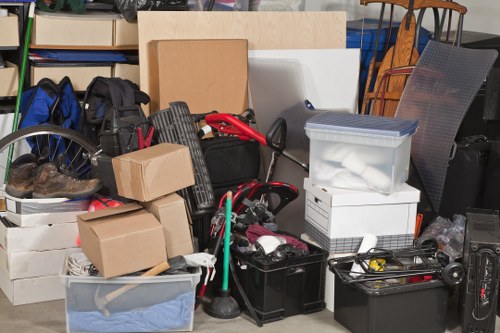
Office clearance is not just about large furniture. Many jobs include the contents of desk areas, storage rooms and back-office spaces that have built up over time. Files, stationery, packaging, presentation equipment, small shelving and mixed office items may all need to be dealt with together. A useful clearance plan should account for the difference between bulky items, loose contents and anything that requires more careful sorting before removal. That is especially true in workplaces where several teams have shared the same storage.
For businesses that want to clear an office systematically, the order of work matters. A room-by-room approach can help ensure that important material is not removed with the waste and that items with a useful life are separated before loading begins. It also gives you a cleaner way to decide what happens to redundant stock, archived paperwork storage and spare office equipment. Good preparation need not be complicated; it usually means knowing which areas are included and whether any items have to be left accessible for others on the premises.
Before asking for a quotation, it is usually enough to give a simple breakdown of the job and a note on access, such as stairs, lifts or loading restrictions. If you want a wider view of what we handle, our office clearance page is the most direct starting point, and about us gives a little more context about the business. A brief enquiry is often enough to begin the process.
Planning a clearance in occupied or shared premises
Many office clearances take place in buildings that are still occupied, partly used or shared with other tenants. That can make timing and coordination just as important as the removal itself. We work in a way that respects the surrounding space and the practical limits of the premises, which may include restricted corridors, lift use, building access windows or shared entrances. A sensible plan helps keep the job moving without creating unnecessary disruption for other users of the building.
Where a workplace remains active, it is useful to separate the clearance into distinct areas and decide which parts are ready to be emptied first. This can reduce interruptions and make it easier to keep essentials in place until the right stage of the job. If you are preparing an enquiry, two things are especially helpful: a short description of the items involved and a note about how the site can be reached. After that, you can simply ask us to prepare a quotation based on the space and contents described.
For enquiries that involve broader building clearances, our business waste removal page may also be useful, especially where an office project includes a steady flow of mixed waste as well as furniture. For more routine non-office collections, waste removal gives a useful overview of the general service range. The aim is to keep the job practical, not overcomplicated.
About Chelsea
Chelsea is an inner London district on the north bank of the River Thames, long associated with a compact street pattern, period architecture and a strong cultural reputation. It sits within the Royal Borough of Kensington and Chelsea and includes well-known routes such as the King’s Road, which became famous in the twentieth century for fashion, music and design. Away from the main commercial streets, the area is known for tree-lined residential squares, embassies, galleries and mews streets that reflect layers of development from earlier centuries. Chelsea Old Church and the nearby churches of the district illustrate its older parish history, while the riverside at Chelsea Embankment provides a distinctive edge to the neighbourhood. The area has also been shaped by institutions such as the Royal Hospital Chelsea, founded in the late seventeenth century for army veterans, whose grounds and ceremonial traditions remain part of the local identity. Cultural life continues through independent shops, restaurants, galleries and the annual Chelsea Flower Show, which attracts international attention and adds to the district’s profile. Despite its compact size, Chelsea contains a notable mix of historic fabric and modern adaptation, with private garden squares, listed buildings and contemporary uses sitting close together. Its setting between Belgravia, South Kensington and the Thames gives it a clear place in central London’s geography, while transport connections and riverfront walks link it to the wider city. The result is a neighbourhood that combines residential calm with visible commercial energy, making it one of London’s most recognisable districts.
Clearance for moves, refurbishments and handovers
Office clearances are often tied to a change in the way a building is used. A company may be moving to smaller premises, refitting an existing floor or handing back a leased unit, and each situation brings a slightly different pattern of work. The important point is to match the clearance to the end goal. If furniture is being removed before decorators or contractors arrive, the space may need to be left open and ready. If the office is being emptied before a handover, the finish may need to be more thorough so that nothing unnecessary remains.
We can support clear-outs that involve a mix of retained items and surplus contents, and we can adjust the work accordingly when only certain rooms, departments or furniture groups are part of the project. In practice, this means the service can suit both partial office clearances and fuller removals. It is usually best to identify any items that must stay, any that should be moved first and any that can be cleared once the main access route is open. That keeps the job organised and helps avoid repeated handling.
If you are comparing related services, home clearance and house clearance show how we approach other property-based clear-outs, while flat clearance is relevant where access is tighter or the premises are smaller. These pages can help you see how the service is adapted to different layouts, even though an office job has its own practical requirements.
Handling different office contents carefully
Office clearance work often brings together items with different sizes, weights and handling needs. A reception unit may be simple to remove, while a heavy filing cabinet or awkward storage piece may need more careful movement. Smaller contents can also create problems if they are scattered across several rooms and cupboards. That is why we favour a structured approach, with clear separation between large furniture, loose contents and anything that should be treated cautiously during loading and transport.
In some offices, the main challenge is not weight but volume. Paper archives, packaging, redundant accessories and miscellaneous contents can fill shelves and cupboards surprisingly quickly. In others, the issue is the layout: narrow access, stairs, shared corridors or limited parking can affect the order in which items should be taken away. Where this applies, it helps to think through the route from the room to the vehicle before the job starts. A little planning can make a substantial difference to how smoothly the clearance runs.
For customers who want to understand pricing factors in more detail, our pricing and quotes page is the best place to start. If you already have enough information to move forward, the next step is simple: tell us what needs clearing and request a quotation in your own words. You do not need a formal inventory to begin.
Recycling, reuse and responsible sorting
Where office items are suitable for reuse or recycling, it makes sense to keep them separate from general waste where practical. That approach supports a more orderly clearance and can reduce the amount of mixed material that has to be handled together. We look at the job as a sequence of decisions: what is being removed, what can be grouped safely and what should be set aside for different treatment. This is especially relevant when a project includes both furniture and mixed contents rather than a single type of item.
The best results usually come from a clear, realistic list of what is staying and what is going. If you are unsure about certain pieces, it is better to flag them early than to leave them mixed in with everything else. A selective clearance can still be efficient, provided the items are identified clearly. That is one reason a concise written enquiry often works well: it gives enough detail to shape the response without forcing you to prepare unnecessary paperwork. Clarity, not complexity, is what makes the job easier to organise.
For more on how we approach materials and sorting, see recycling and sustainability. If your project is tied to premises cleaning rather than office contents, garage clearance and loft clearance show how we handle other spaces where mixed items can accumulate over time.
Requesting a quotation for office clearance
A useful quotation starts with the basics: the type of office, the rooms involved, the items that need to be removed and any access considerations that may affect the work. That might include floor level, stairs, lift use, loading restrictions or whether the space is in regular use while the clearance is being arranged. If you can describe the general contents and the level of clearance required, we can respond with a more relevant outline of the service.
It also helps to mention whether the job is a simple furniture removal, a fuller clear-out or a mixed project that includes storage, office waste and leftover contents. From there, the next step is straightforward. You can ask us to quote for the work, and if the office has especially bulky or awkward pieces, note them in the enquiry so they can be considered from the start. That first description does not need to be perfect; it just needs to be honest and useful.
To get started, use the contact us page and send a short description of the clearance you need. If you want to compare the main service again before you enquire, return to office clearance for a simple overview of what we handle in Chelsea. We are happy to discuss the job and help you move toward a quotation.